

When a manufacturer processes purchase orders from 2,000 buyers, the extraction itself is rarely the problem. The real challenge is that every buyer formats their documents differently.
Buyer A puts the PO number in the top-right corner. Buyer B embeds it in a paragraph. Buyer C renames it “Order Reference” and drops it in the footer. Line-item tables range from flat 6-column layouts to nested hierarchical structures with sub-rows spanning multiple pages.
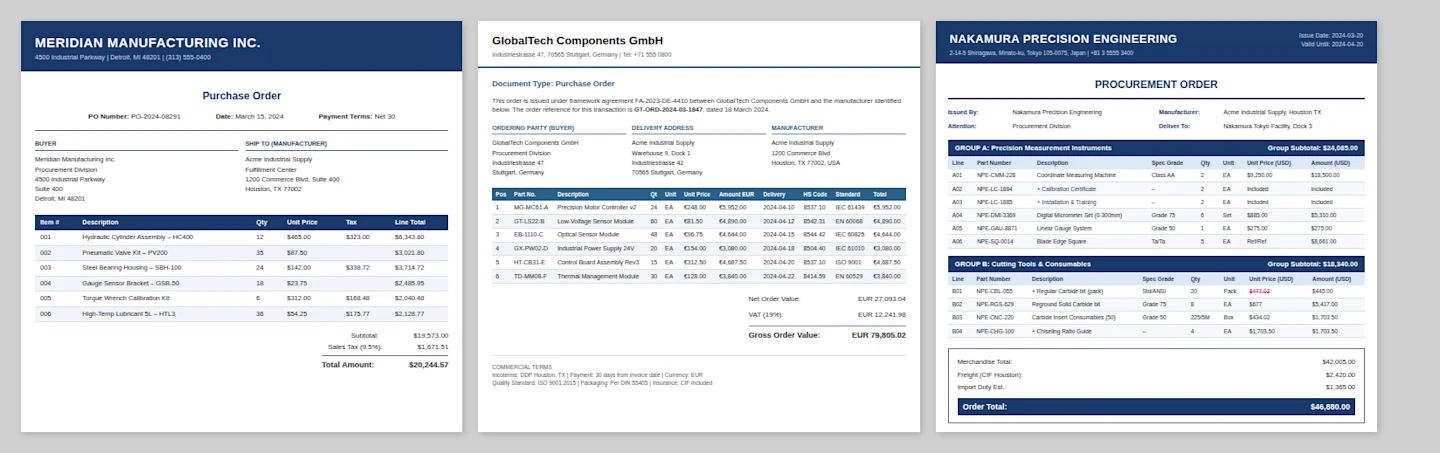
This is document variability in practice. It is not a single problem, but a compounding stack of format diversity, structural complexity, terminology mismatches, and positional inconsistency, all arriving in the same pipeline at the same time.
Most document processing tools address one layer of this stack. They handle format conversion or simple extraction well, but they leave the rest to manual effort. Astera ReportMiner was designed to solve the full stack, from ingestion to structured output, within a single platform built on over a decade of enterprise production experience.
Document Variability Goes Deeper Than Format
It is easy to think of variability as a format issue. PDFs versus scanned images versus Excel files. But format is only the surface layer.
Consider a logistics company processing freight documents from 50 carriers. The documents arrive as PDFs, scanned images, and occasionally as fixed-width text exports from legacy systems. That is format variability. But the deeper problem is structural. One carrier’s bill of lading uses a flat 8-column table. Another uses a hierarchical layout where a single shipment record spans multiple rows, with nested sub-tables for individual packages. A third carrier includes the same data points arranged in an entirely different spatial order.
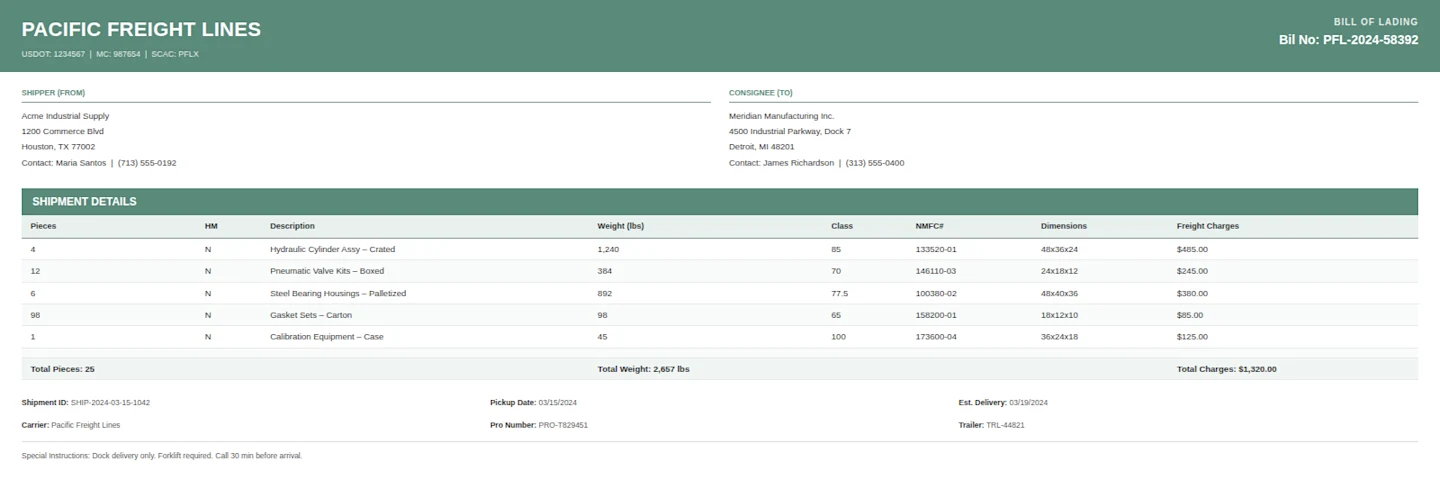
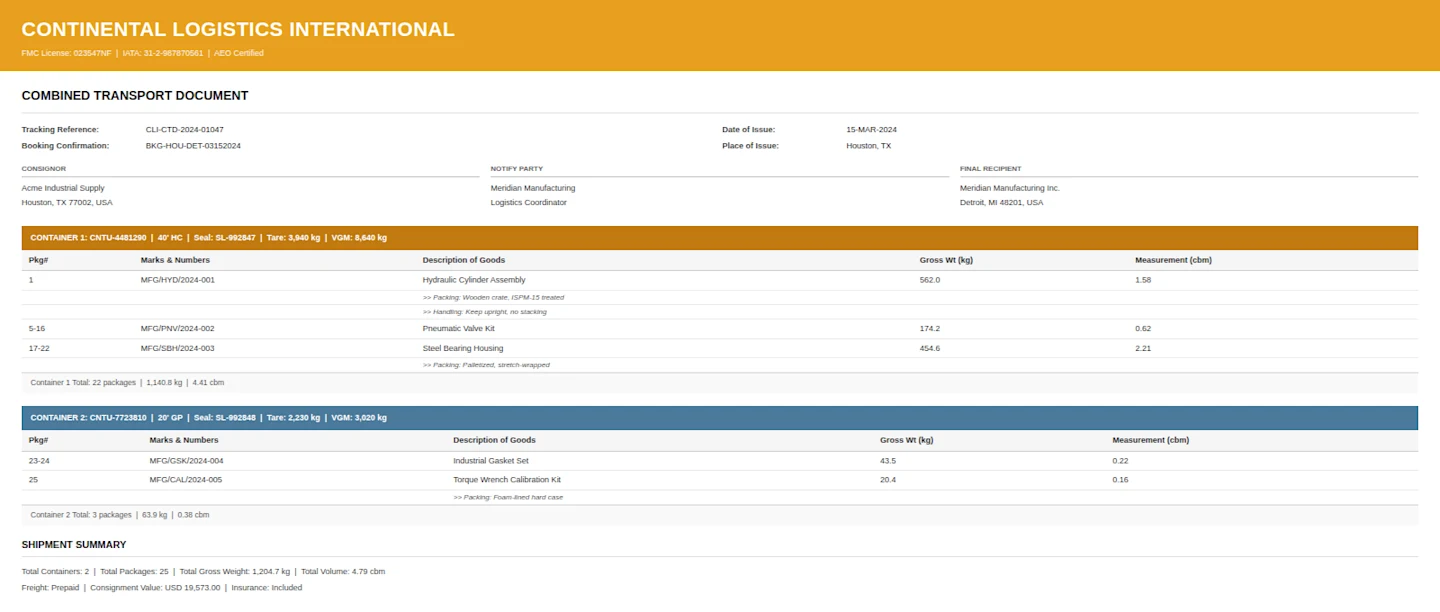
On top of that, field names and positions shift further. “Shipment ID” in one document becomes “Tracking Reference” in another and “Consignment Number” in a third. The total weight field might appear in column 6 for one carrier and as a standalone value below the table for another.
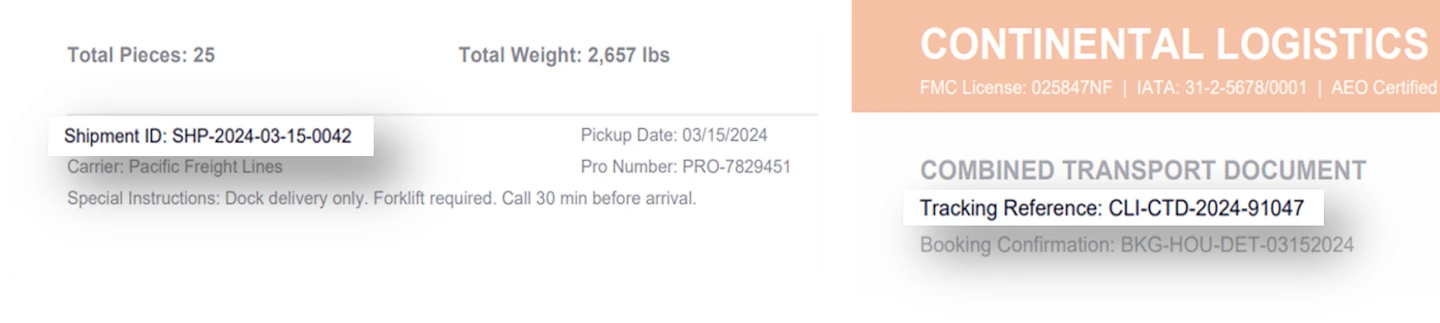
A system that reads formats but cannot navigate structural, terminological, and positional differences will still require manual intervention on every new layout, which is precisely where most extraction tools reach their limit.
How ReportMiner Addresses Each Layer
ReportMiner does not treat document variability as a single problem to solve with a single technique. Instead, it provides a set of capabilities that each address a specific layer of variability and allows you to combine them within a single extraction pipeline.
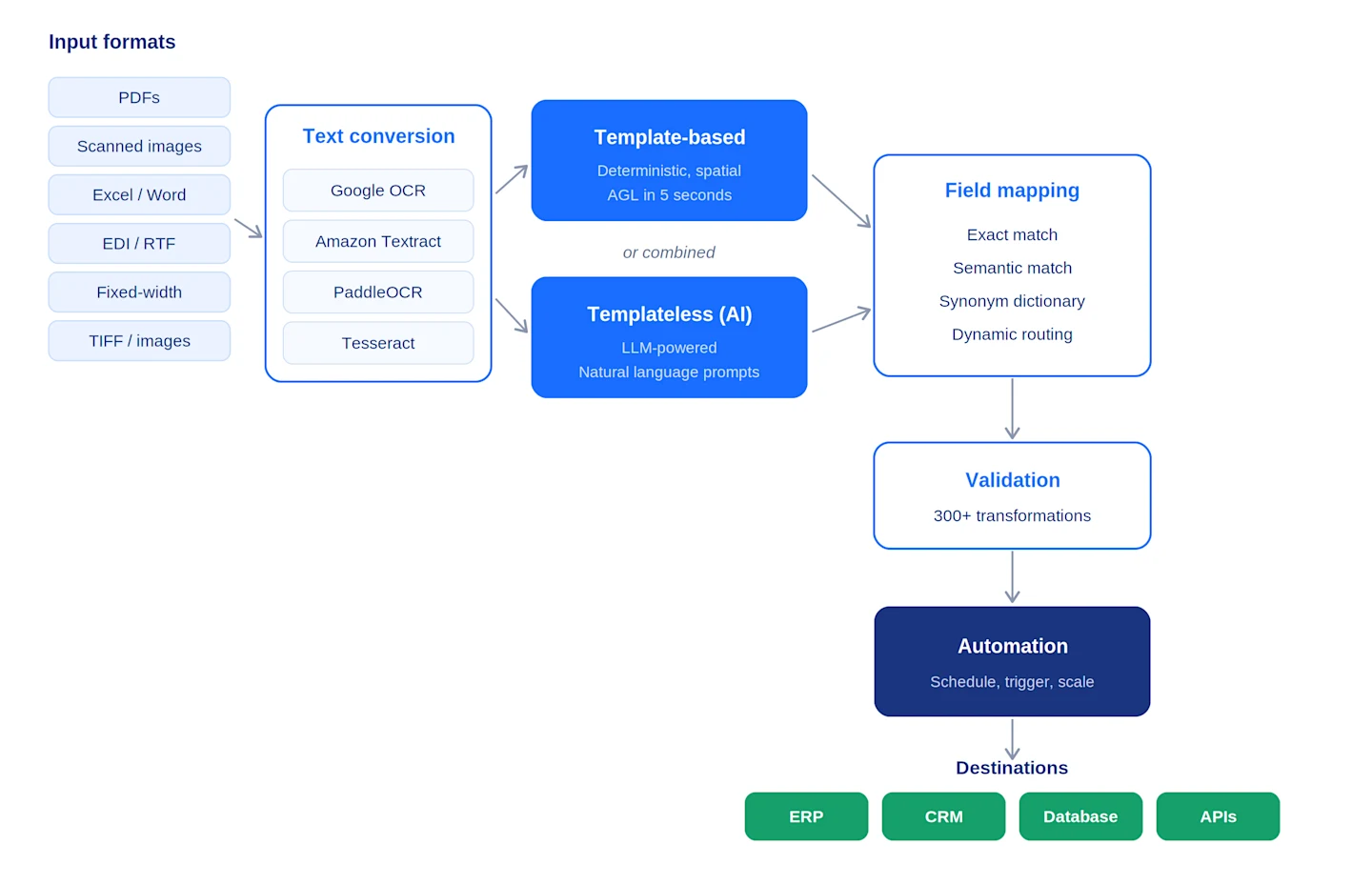
Multi-Format Ingestion and OCR
The first step is converting diverse input formats into machine-readable text. ReportMiner handles PDFs, Excel files, Word documents, scanned images, TIFF files, RTF, fixed-width text, EDI files, and more. For scanned and image-based documents, the platform offers access to multiple OCR engines:
Google OCR — strong on clean, high-resolution scans
Amazon Textract — optimized for table and form detection in scanned pages
PaddleOCR — effective for multilingual documents and complex scripts
Tesseract — reliable for straightforward text extraction without cloud dependencies
The ability to select the right OCR engine per document type, and to use different engines for different document types within the same pipeline, is what makes multi-format ingestion practical at scale. A single OCR engine will not perform equally well on a crisp digital PDF, a faded warehouse receipt, and a fixed-width mainframe report. ReportMiner lets you match the engine to the document.
Template-Based Extraction for Predictable Layouts
For documents that follow a consistent layout, template-based extraction delivers the most accurate and cost-effective results.
You define data regions and fields on a sample document, and the system applies that template to every document sharing the same layout. The extraction is deterministic, driven by spatial coordinates and pattern rules rather than probabilistic AI inference.
This distinction matters when you are dealing with dense, complex documents. A purchase order with 50+ columns and hierarchical line items with nested sub-rows extracts correctly every time, with no context window limitations, no column-shift errors, and no per-page inference cost.
Template creation is accelerated by the AI-powered Auto-Generate Layout feature. Instead of manually defining each data region, upload a sample document and the system produces an accurate template in approximately 5 seconds, reducing setup effort by roughly 97%.
Once created, templates are reusable across every document that shares the same layout. For organizations processing recurring purchase orders from the same buyers, or monthly reports from the same business units, template reuse converts one-time setup effort into long-term automation.
AI-Powered Extraction for Variable Layouts
Not every document type is predictable. When documents arrive from new buyers with unfamiliar layouts, or when the same document type varies significantly across senders, building a template for each variant becomes impractical.
ReportMiner's template-less extraction addresses this with large language model-powered processing. You write a natural language prompt describing what to extract, for example, “extract the buyer name, PO number, line items with quantities and unit prices, and the total amount.” The AI engine adapts to the document’s structure and returns the data in a structured format like JSON or CSV.
This approach is particularly effective for one-time document batches, high-variability sources, or layouts where volume is too low to justify template creation. For scanned documents, the system first runs OCR, selecting the appropriate engine for the document type then passes the output to the AI extraction layer.
Template-based and AI-powered extraction are not mutually exclusive. ReportMiner supports both within the same pipeline, routing documents to the appropriate method and feeding results into the same downstream validation and export process.
Intelligent Field Mapping Across Sources
Extracting data from variable documents is only part of the problem. Once extracted, fields then need to map to a standardized target schema that your ERP, CRM, or database expects. When 2,000 buyers each use different field names and structures for the same data points, manual mapping creates a bottleneck.
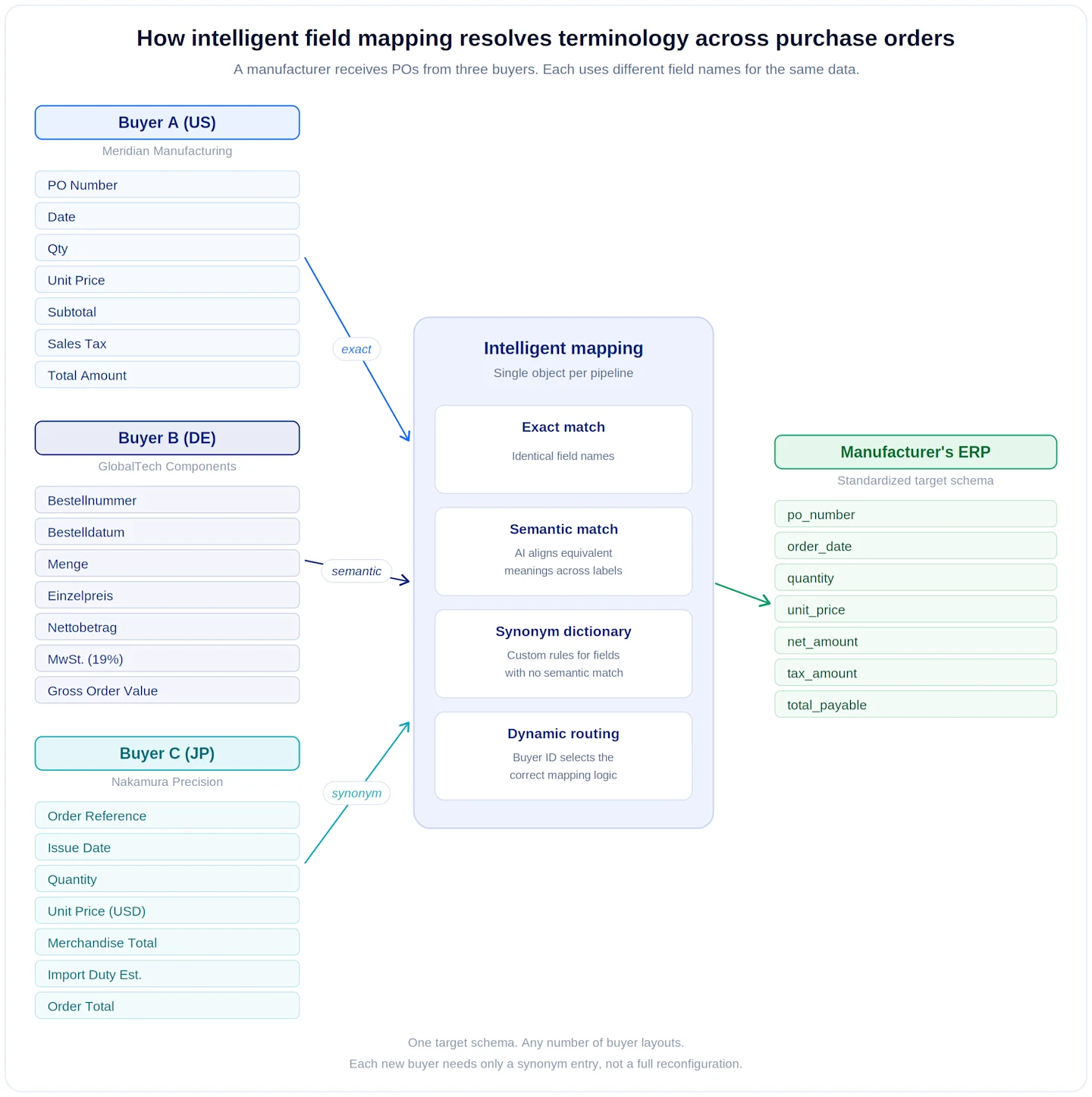
ReportMiner’s intelligent mapping resolves this through a layered matching approach:
Exact matching — handles fields with identical names across source and target. When a buyer's "PO Number" maps directly to your system's "PO Number," no additional logic is needed.
Semantic matching — handles fields with different names but equivalent meaning. "Order Reference" in one buyer's document maps to "PO Number" in your target. "Amount Payable" maps to "Order Total." The system uses semantic understanding to identify these equivalences automatically, without requiring manual configuration for each pair.
Synonym dictionaries — handle cases where neither exact nor semantic matching applies. When a buyer uses "Inclusive of GST" and your system expects "Order Total," a synonym dictionary allows you to define that explicit mapping. The system then applies it automatically whenever documents from that buyer are processed.
Dynamic mapping by identifier — ties it all together. Using a document-level identifier, such as a buyer code or account number, the system dynamically selects the correct mapping logic for each incoming source. You define the target layout once, and the platform handles the mapping from every buyer's layout based on the identifier.
In production at a manufacturing company, this approach reduced manual field mapping effort by 80–90% and cut new buyer onboarding time from days to hours. As the buyer count scaled from dozens to hundreds, the mapping system scaled with minimal maintenance, because each new buyer needed only a synonym dictionary entry, not a full reconfiguration.
What Happens After Extraction
Extraction and mapping produce structured data. But structured data is not necessarily clean data. Before it reaches your downstream systems, it needs to pass through validation.
ReportMiner includes 300+ built-in transformation functions for cleaning, restructuring, and standardizing extracted data. You can apply data type conversions, string manipulations, date formatting, mathematical calculations, and conditional logic as part of the extraction pipeline.
Validation runs against user-defined business rules embedded in the pipeline. Error counts, null counts, and warning counts are tracked at every stage, giving you a detailed quality profile of every batch before it reaches your systems. Calculated fields can be derived from extracted data using the built-in function library, so aggregations, lookups, and cross-field validations happen automatically.
This validation layer is not a separate tool or a post-processing step. It is built into the same pipeline that handles extraction and mapping. Data reaches your ERP, CRM, or database only after it has been checked against your rules.
Scaling Through Automation
The full pipeline, format conversion, extraction, mapping, validation, and export runs as an automated workflow that can be scheduled, triggered, and distributed.
ReportMiner’s workflow engine supports scheduling by time interval, triggering on file drops or email arrivals, and invocation via API events. Batch jobs distribute across multiple servers for parallel processing, which matters when you are dealing with thousands of documents per day across multiple document types and source formats.
A centralized monitoring dashboard provides real-time visibility into every running job, with server diagnostics, log files, and configurable alert emails keeping operations teams informed without requiring them to watch the system actively.
The operational model for teams using ReportMiner in production tends to follow a consistent pattern: configure the pipeline once, connect it to your infrastructure through the platform's 100+ native connectors to databases, cloud storage, APIs, and enterprise systems, and let it run. The team's ongoing involvement focuses on exception handling and pipeline optimization, not routine extraction work.
The Compound Effect
Document variability is expensive when each new layout variant requires manual intervention. It becomes manageable when the system handles format conversion, structural extraction, field mapping, validation, and automation in a single pipeline.
ReportMiner's approach works because it does not rely on a single technique to solve every type of variability. Template-based extraction handles known, complex layouts with deterministic precision. Template-less AI extraction handles unknown and variable layouts with adaptive flexibility. Intelligent field mapping resolves terminology and positional differences across sources. And the entire pipeline runs at enterprise scale through workflow automation and multi-thread processing.
The result is a document processing system that adapts to variability by design, built on over a decade of enterprise production experience and continuously extended with modern AI capabilities.
Ready to automate your document processing? Explore ReportMiner and see how it handles your document variability from ingestion to structured output.