
Visual Data Modeling, Automated with AI
Design schemas visually, reverse engineer any database and build Kimball, star schema and Data Vault 2.0 models with AI. Deploy the DDL to your cloud database from one platform.
How AI-powered data modeling comes together
Start from the database you already have, shape it for analytics and deploy it, with AI drafting changes and your team reviewing them.
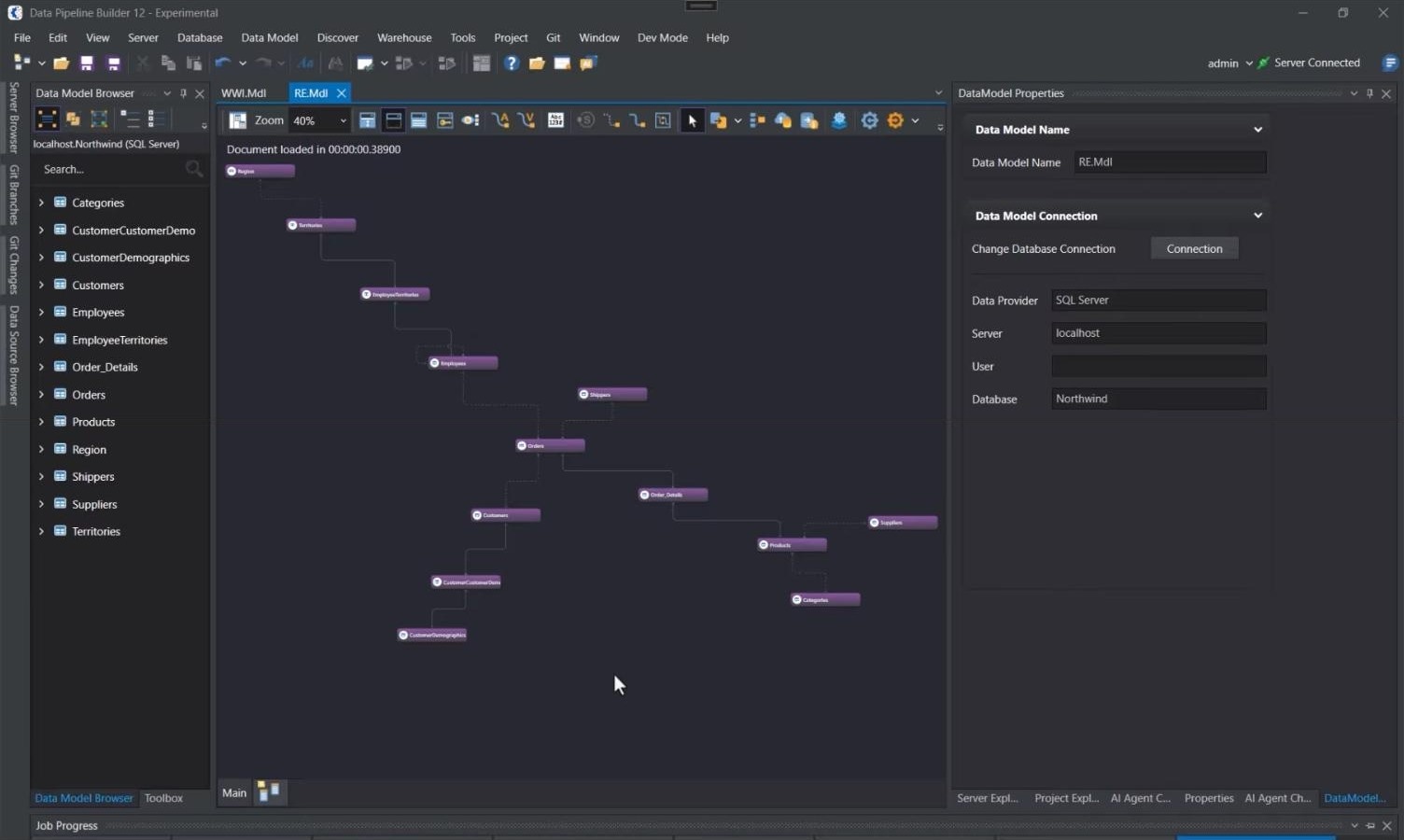
Step 1 of 4: Reverse engineer your database
See AI-powered data modeling in action
Data modeling capabilities in one unified platform
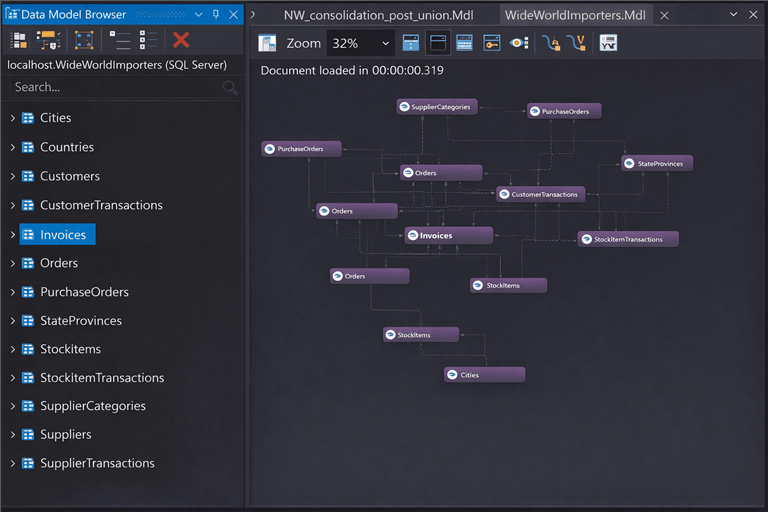
Drag-and-drop schema builder
Design entities and relationships on a visual canvas, starting from a toolbox of data model entities. No code is needed to create or edit a model.
Database reverse engineering
Generate a model from your existing database metadata, with tables, columns, data types and relationships, so legacy systems are easy to modernize.
AI chat for model changes
Update entities, attributes and relationships by typing natural language commands, for example to merge two entities into one.
Kimball star schema builder
Choose facts and dimensions and generate a star schema, with options for surrogate keys, child fact handling and date relationships.
AI-assisted fact and dimension selection
Let AI Select suggest which entities act as facts and dimensions, then review and adjust the choices before the model is built.
Data Vault 2.0
Convert entities into hubs, links and satellites, with business keys, hash keys, record source and load timestamps assigned for you.
Forward engineering and DDL generation
Generate the DDL script and apply it to your chosen cloud database, with platform-specific DDL for targets such as Snowflake, Amazon Redshift, Azure Synapse, SQL Server, PostgreSQL and Oracle.
Model-driven pipelines
Deployed models expose their fact, dimension and Data Vault entities to the Fact Loader, Dimension Loader and Data Vault Loader in your dataflows.
SCD Type 2 automation
Slowly changing dimension handling, including Type 2, is built into dimension loading, so history is tracked without hand-written scripts.
Reusable models
Save a model and reuse it as the starting point for future projects, instead of redrawing the same schema each time.
Date and time dimensions
Add date and time dimensions from the toolbox, or let the dimensional model add date relationships to your facts for you.
Team collaboration
Git-based version control lets architects and analysts work on the same models and keep a history of every change.
Human review before anything is deployed
AI drafts and edits the model, and your team reviews and approves it. AI works at design time, and runs execute deterministic logic from the approved configuration.
Deployment and governance
Role-based access control for your modeling projects. Deploy Centerprise on-premises or in your own cloud environment.
AI-assisted data modeling built for architects and analysts
A faster start from what you have
Reverse engineering turns an existing database into a visual model, so no project starts from a blank page.
Built for architects and analysts
A visual designer and AI chat commands let both technical and semi-technical users contribute to the model.
Analytics-ready by design
Build Kimball star schemas and Data Vault models on one platform, in a few clicks, ready for reporting and insights.
From model to pipeline
Generated DDL creates the schema, and the loaders in your dataflows populate it, so the design carries straight into delivery.
Keep AI under your control
Agents only reach the data each user can access, your team approves every change, and Astera never trains models on your content.
Predictable, upfront pricing
Pay a custom price that is fixed up front, with renewal terms in writing and annual increases capped for existing licenses.
Rated and recognised by the people who use it
- G24.3/531 reviews
 4.8/513 ratings
 8.7/1055 reviews

The Centerprise product is very well suited for business analysts to easily manage and create custom workflows and models to automate complex data integration.
 Usability
 Performance
 Support
 Support
Pricing fixed up front, from day one.
Your price is custom and fixed up front. Renewal terms are in writing, with annual increases capped for existing licenses.
What's included
- Visual data model designer with reverse and forward engineering
- Kimball star schema and Data Vault 2.0 modeling
- AI chat and AI-assisted model design
- Auto-generated DDL for your cloud database
- Model-driven pipelines with SCD support
- 200+ pre-built source and destination connectors
- Role-based access control and Git-based version control
- Award-winning support, onboarding and training
Data modeling FAQs
Data modeling is the process of defining how data is structured, related and stored, using entities, attributes and relationships, before a database or data warehouse is built. A good model is the foundation for every pipeline and report that follows. Learn more about data modeling .
Yes, with your team in the loop. Centerprise AI reverse engineers a database into a visual model and updates entities, attributes and relationships from natural language commands in the AI chat. Your team reviews and approves every change before the model is deployed.
Data models are commonly grouped into conceptual, logical, physical and dimensional models. Centerprise AI covers the practical path through them: reverse engineer a logical model from your database, shape it into a dimensional (star schema) or Data Vault model, and forward engineer the physical schema with generated DDL.
Start from the databases you already run. Reverse engineering reads their metadata into a model, forward engineering applies the DDL to your chosen cloud database, and the loaders in your Centerprise dataflows populate the deployed model from 60+ native connectors plus 200+ via custom API connectors.
Yes. Slowly changing dimension handling, including Type 2, is built into dimension loading, so history is tracked without hand-written surrogate key and history scripts.
Forward engineering generates platform-specific DDL for targets such as Snowflake, Amazon Redshift, Azure Synapse, SQL Server, PostgreSQL and Oracle, and applies it to the database you choose. You can deploy Centerprise on-premises or in your own cloud environment.
Once a model is deployed, its fact, dimension and Data Vault entities are available to the Fact Loader, Dimension Loader and Data Vault Loader objects in your dataflows. Because the pipelines are driven by the model, a design change made once on the model carries through to them.
Still have questions?
Book a demo